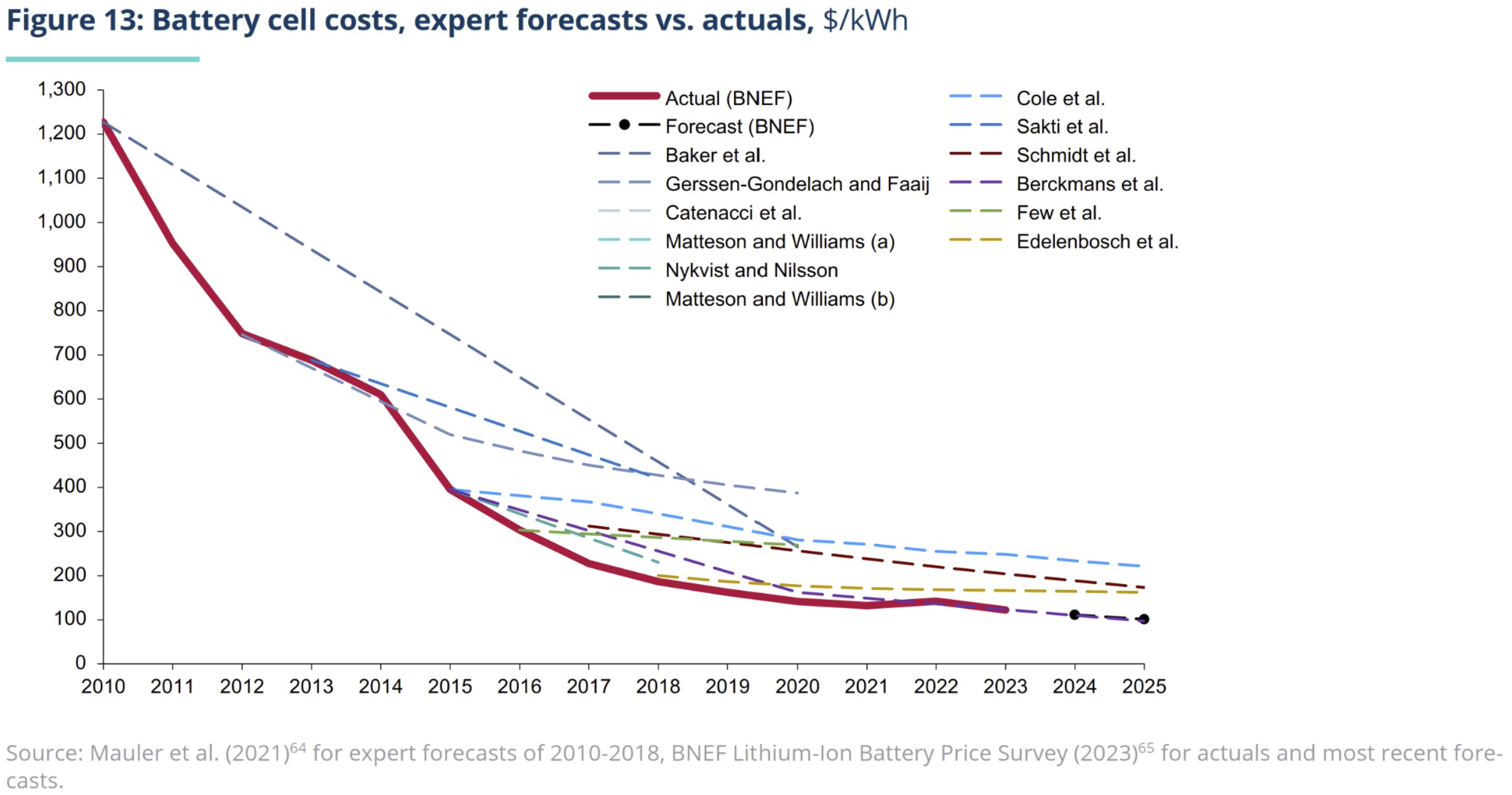
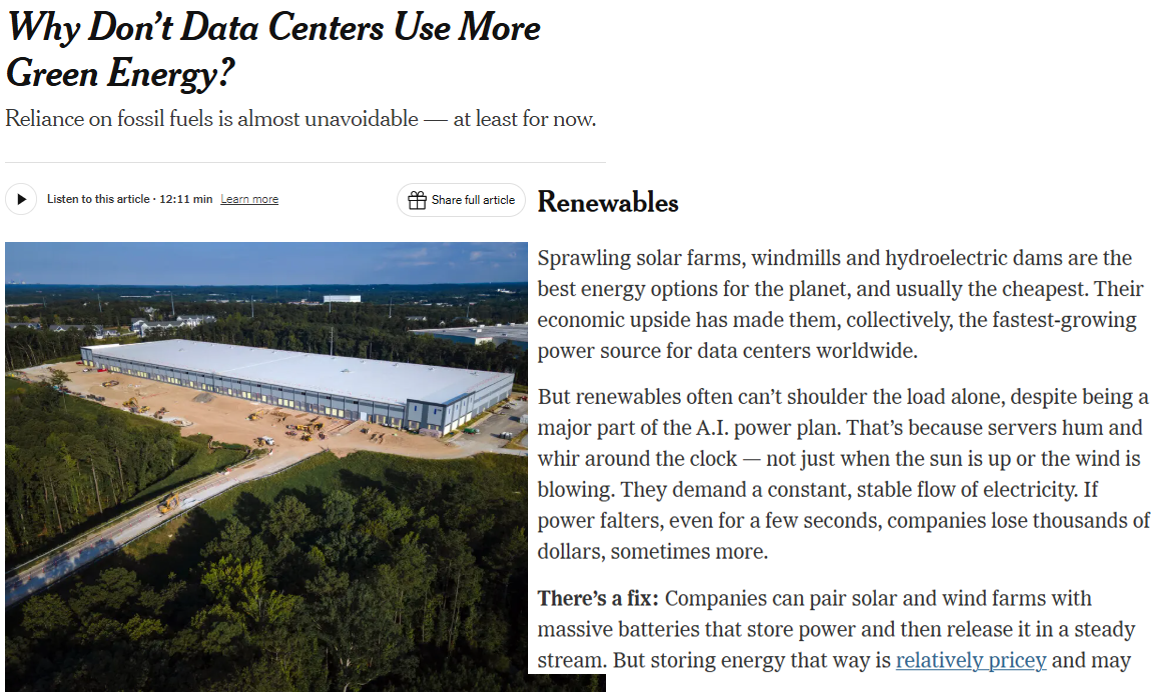
Main limit to renewable adoption is “availability” not cost
![]()
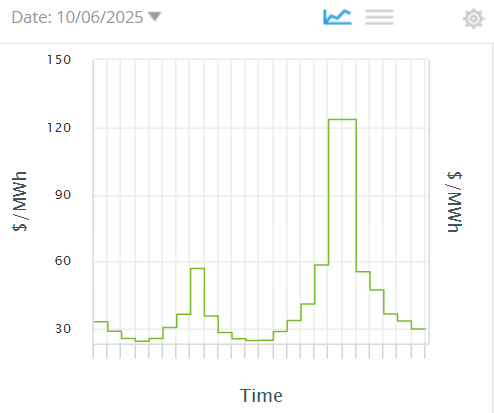
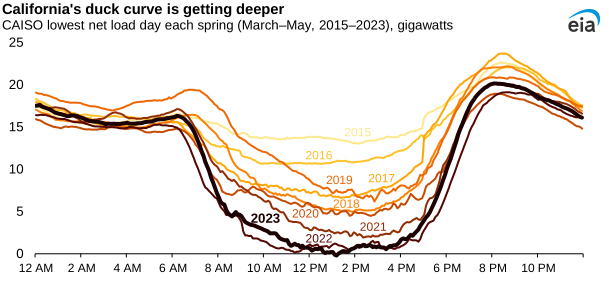
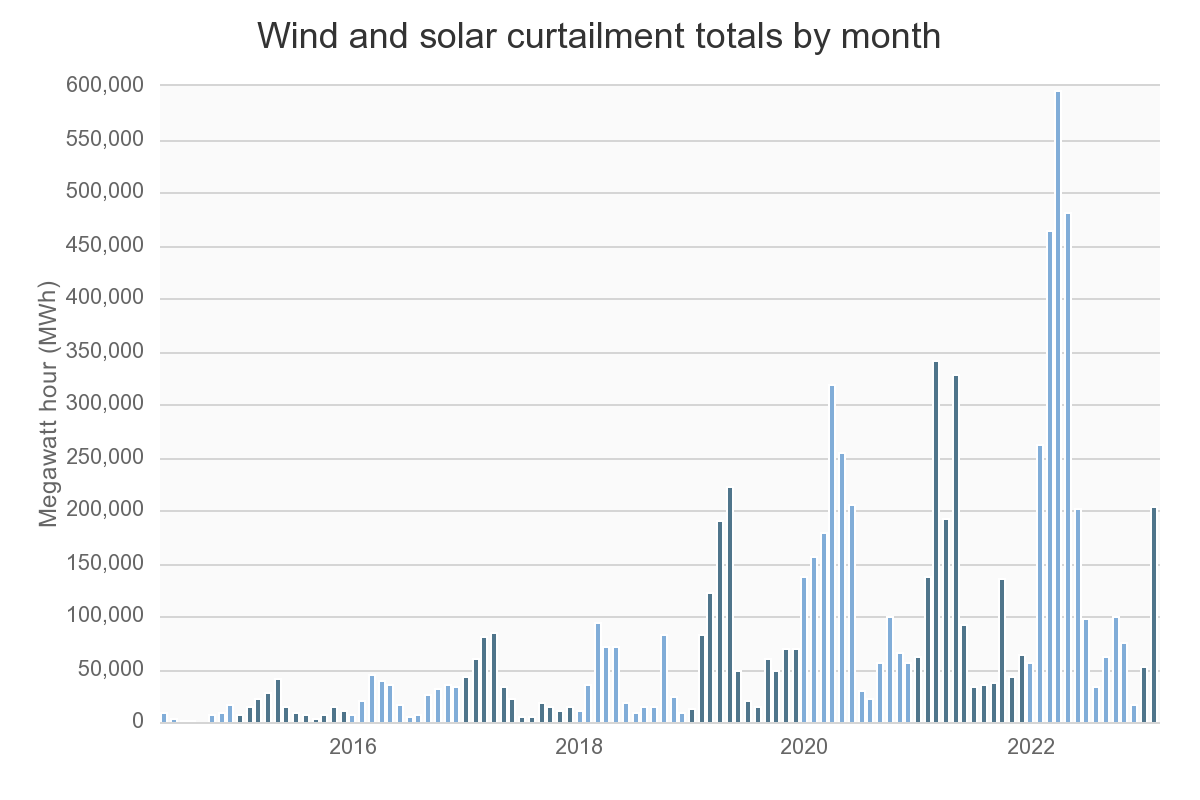
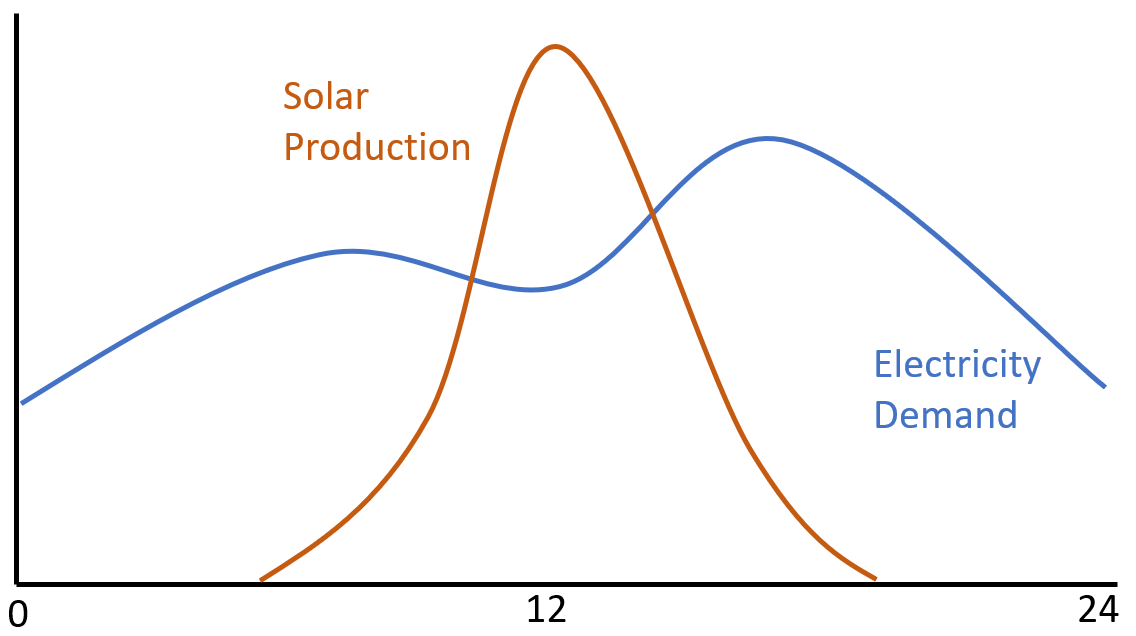
In some places we have “too much” solar (during the day)
Watch this video on the “Duck curve”
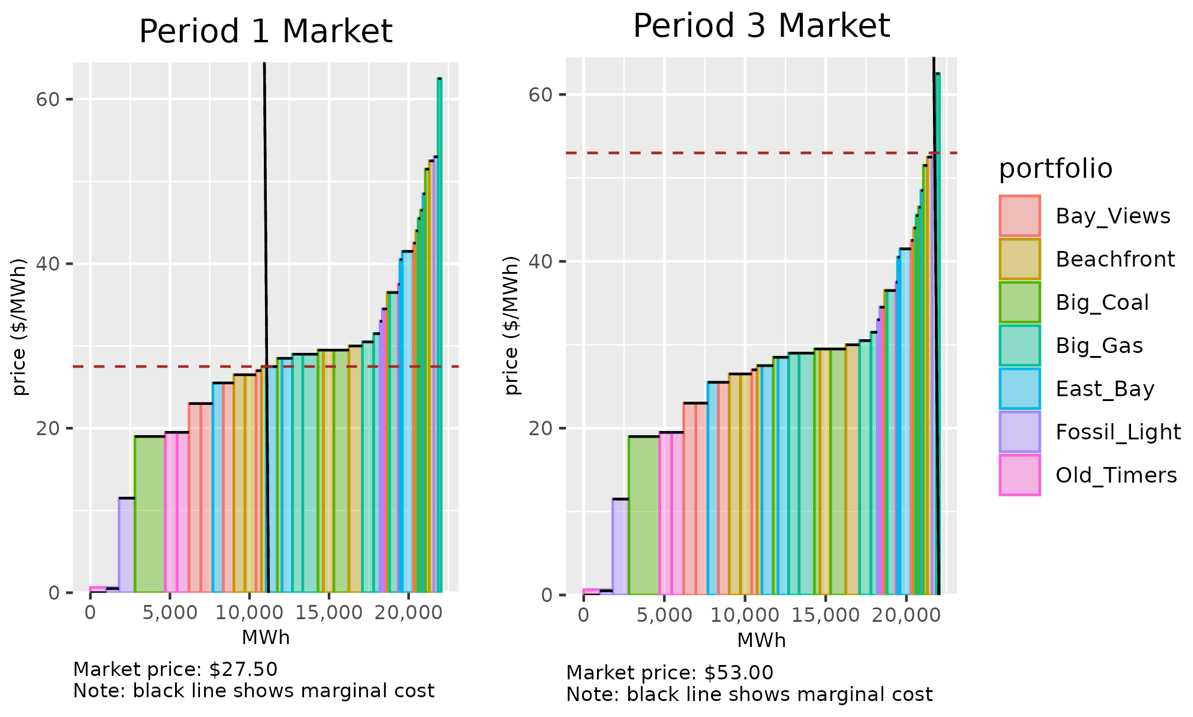
Problem getting worse over time
![]()
Would batteries operating through arbitrage help solar?
- When do you think wholesale prices are highest? Does it correlate with solar production?
Let’s add solar to the 2-period model
Solar only able to produce in period 1 (off-peak)
| solar |
0 |
200 |
0 |
| coal |
40 |
100 |
100 |
| gas |
60 |
100 |
100 |
| oil |
90 |
100 |
100 |
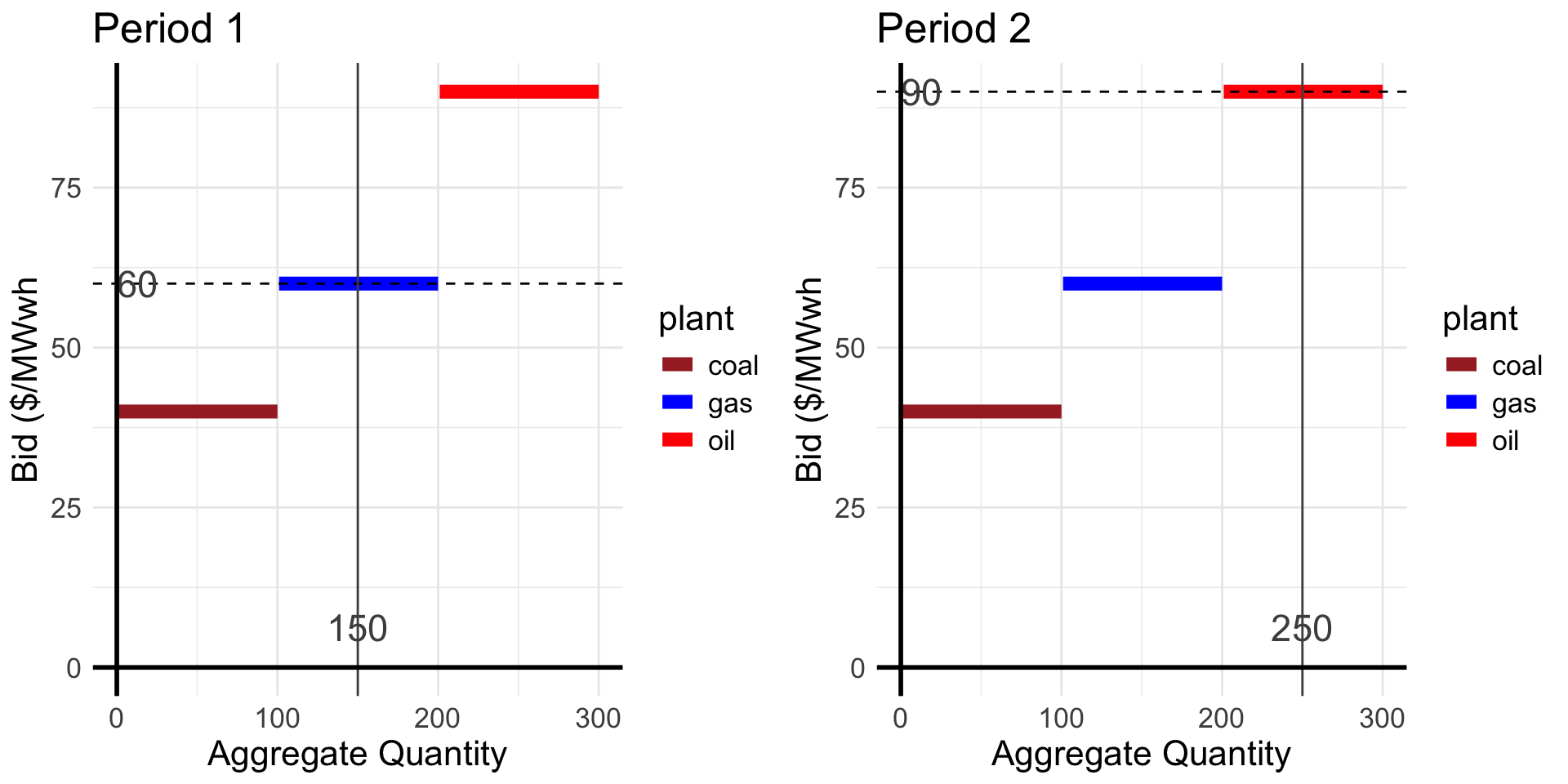
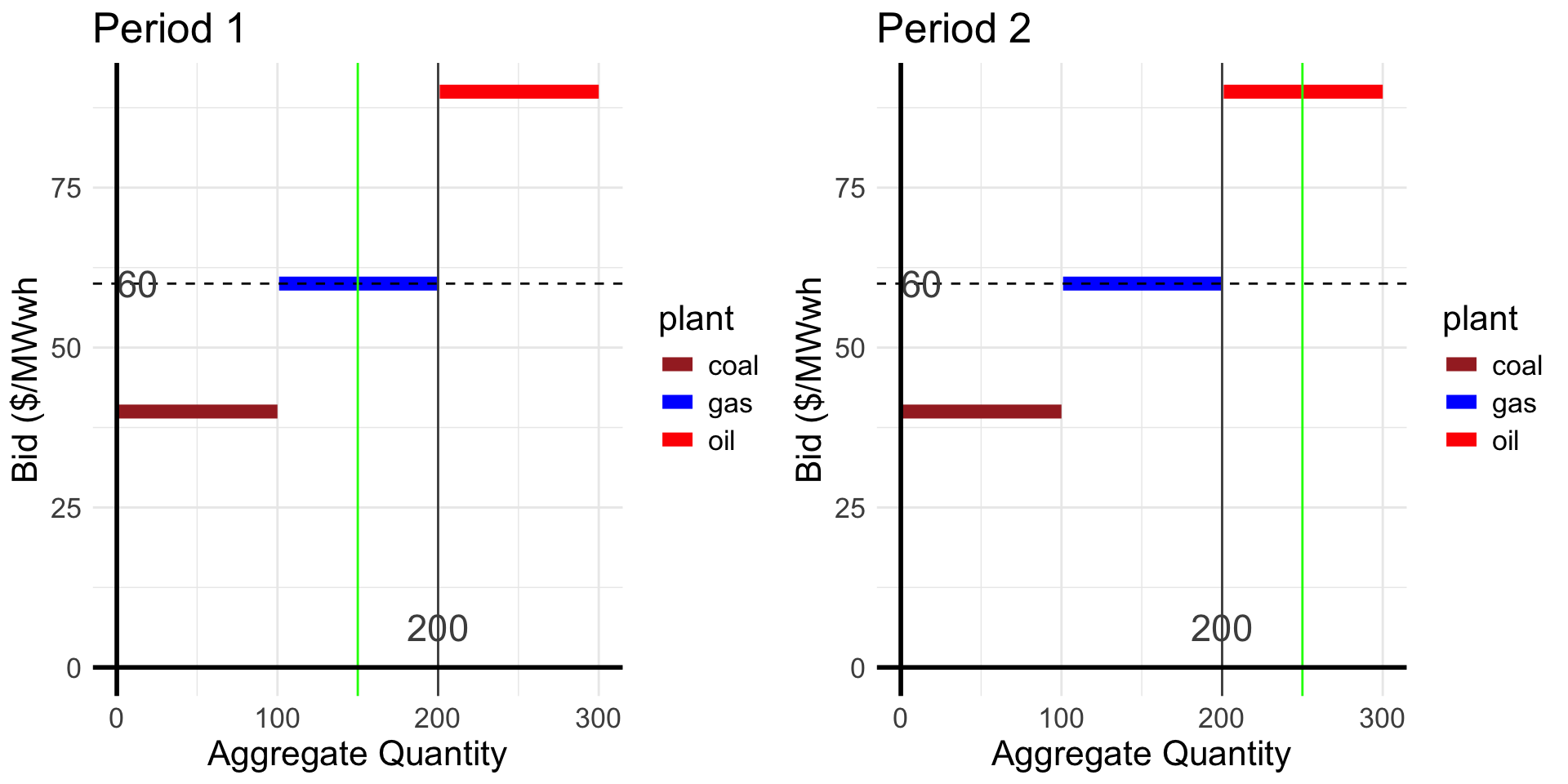
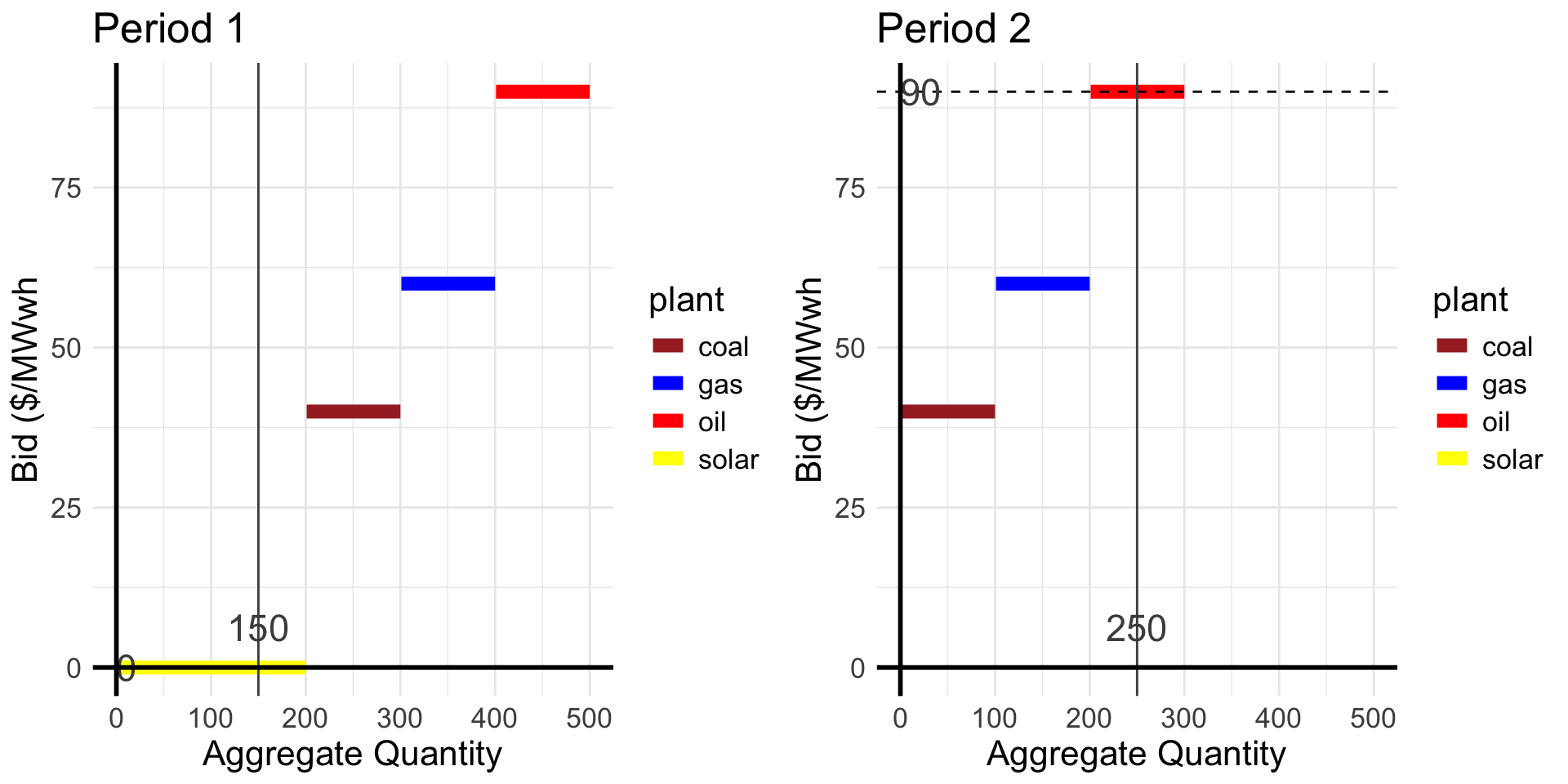
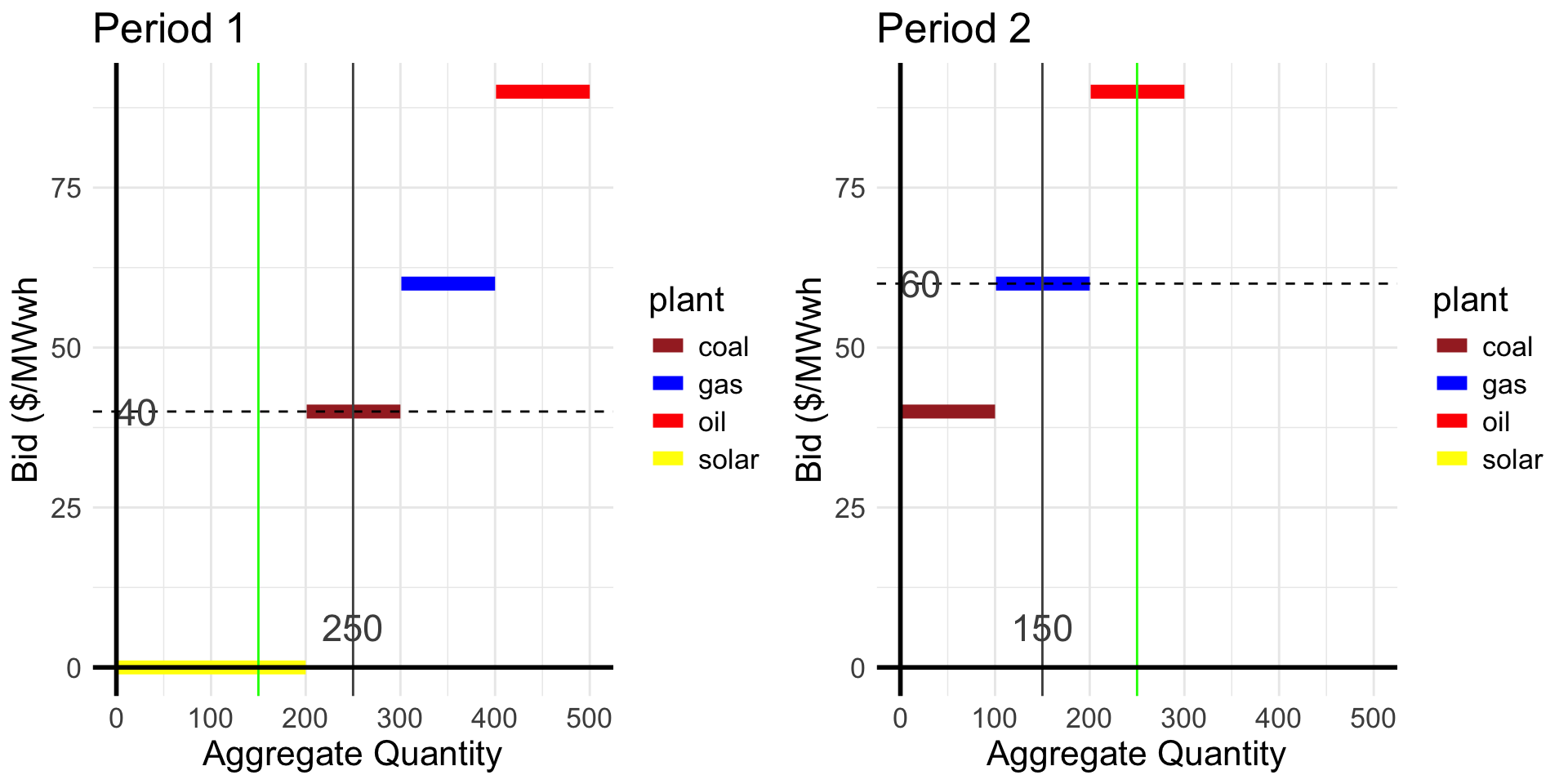
If demand is 150 in period 1, and 250 period 2, what will the prices be?
Baseline outcomes (no storage)
![]()
How much profit is solar earning here?
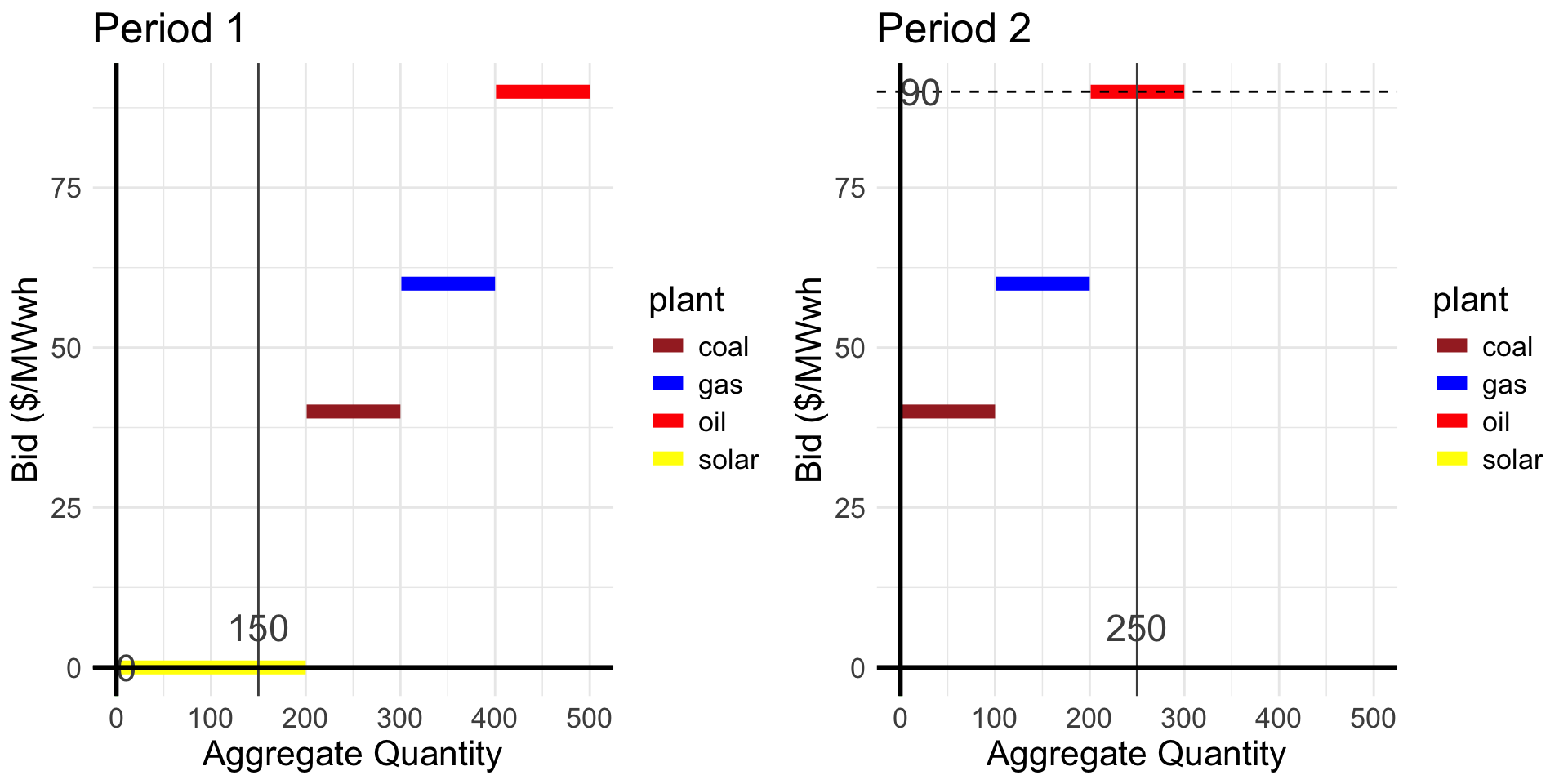
What would a 200 MW battery do to this market?
![]()
Outcomes with (unlimited) battery storage
![]()
How much profit is solar earning now?
Profits with and without storage
| coal |
baseline |
100 |
90 |
5000 |
| coal |
storage |
200 |
40 |
0 |
| gas |
baseline |
100 |
90 |
3000 |
| gas |
storage |
0 |
0 |
0 |
| oil |
baseline |
50 |
90 |
0 |
| oil |
storage |
0 |
0 |
0 |
| solar |
baseline |
150 |
0 |
0 |
| solar |
storage |
200 |
40 |
8000 |
Are batteries worth investing in?
- Imagine batteries are independently owned and operated.
- Owners pay a fixed cost (per capacity)
- They earn money buy buying low and selling high
- How much operating profit does the battery earn in this example?
What if battery capacity was only 100 MW?
![]()
Battery profits with 100 MW capacity
So it might make sense to invest in enough batteries to store all solar power, but not coal.
Are batteries necessarily good for renewables?
- In this example, batteries are good for solar, because the market price is negatively correlated with solar availability
- Either because of solar or because demand is higher in other periods
- This doesn’t necessarily have to be true
- On some days, AC demand might reverse that
- Another important example is wind: In many locations, its windier when the sun goes down.
Consider a market with 50 MW wind instead
Opposite of solar: wind only produces in period 2 (peak)
| wind |
0 |
0 |
50 |
| coal |
40 |
100 |
100 |
| gas |
60 |
100 |
100 |
| oil |
90 |
100 |
100 |
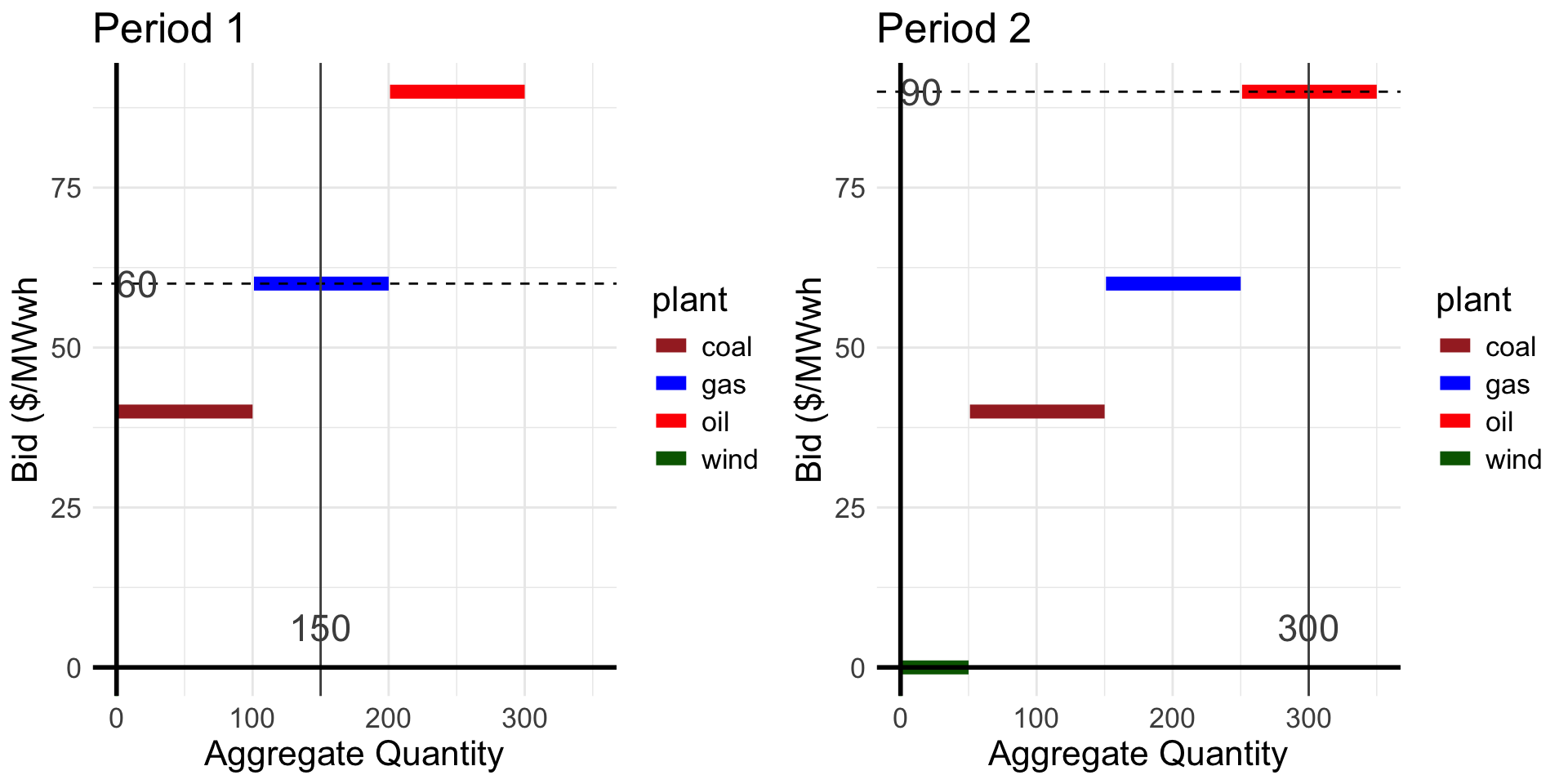
If demand is 150 in period 1, and 300 period 2, what will the prices be?
Baseline outcomes (no storage)
![]()
How much profit is wind earning here?
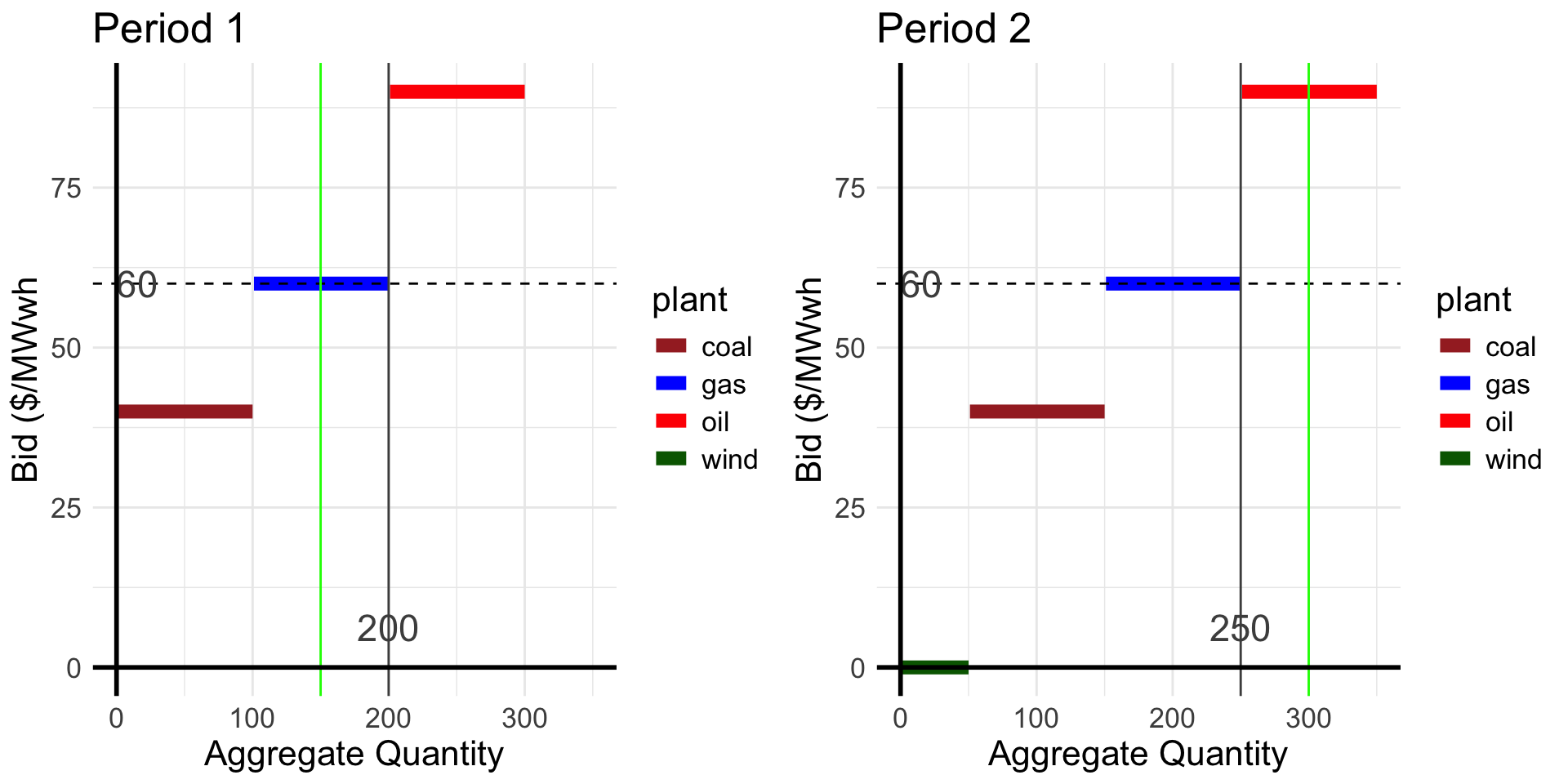
Wind outcomes with (unlimited) battery storage
![]()
How much profit is wind earning now?
Profits with and without storage
| coal |
baseline |
200 |
75 |
7000 |
| coal |
storage |
200 |
60 |
4000 |
| gas |
baseline |
150 |
80 |
3000 |
| gas |
storage |
200 |
60 |
0 |
| oil |
baseline |
50 |
90 |
0 |
| oil |
storage |
0 |
0 |
0 |
| wind |
baseline |
50 |
90 |
4500 |
| wind |
storage |
50 |
60 |
3000 |
Summary on Batteries
- The main limitation of renewables is that they are intermittent
- Batteries solve that problem by allowing battery owners to store power from renewables when prices are low and dispatch when prices are high
- Batteries must be paid for, so gains from this trade need to cover the fixed cost
- Whether batteries help or hurt renewables depends on the correlation between renewable availability and market prices