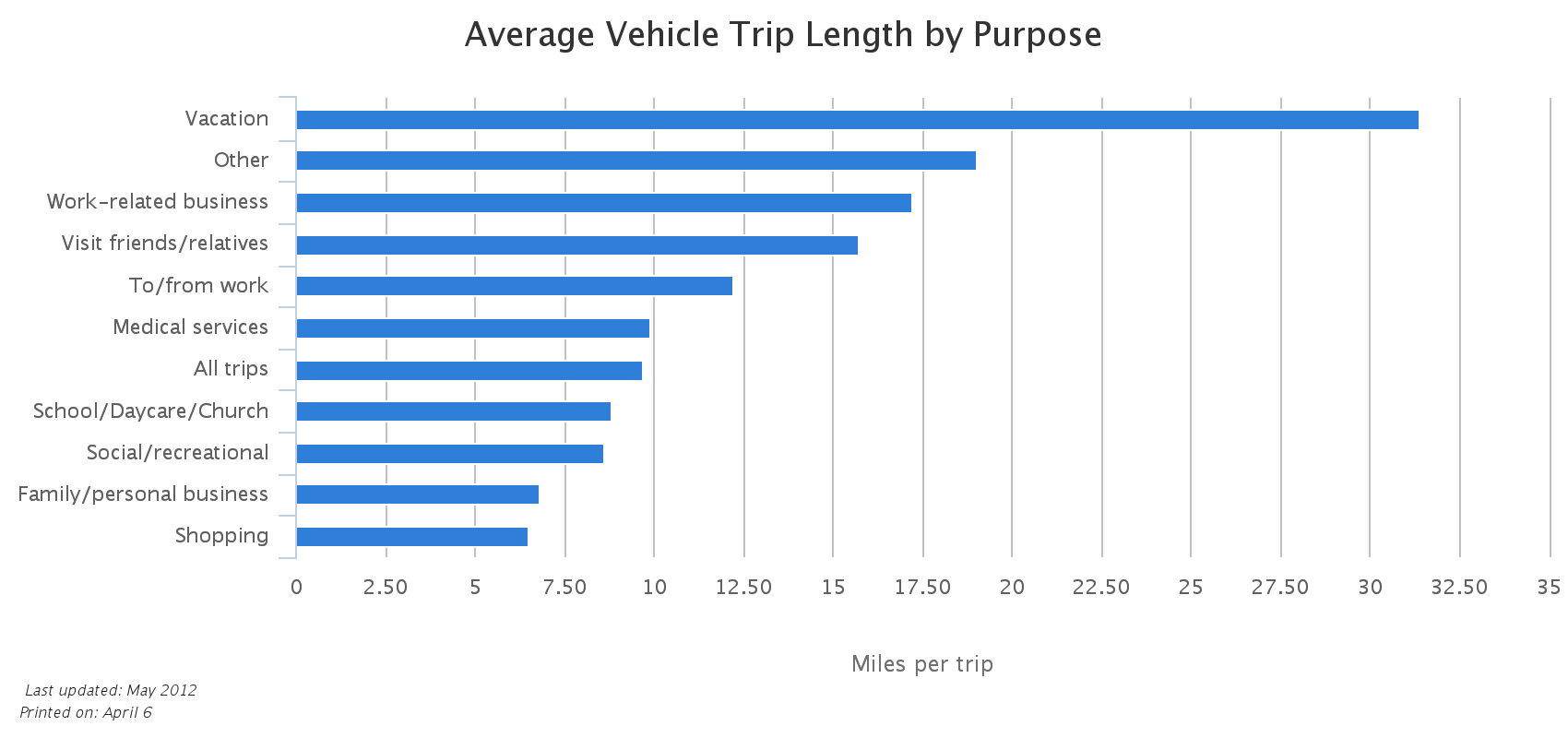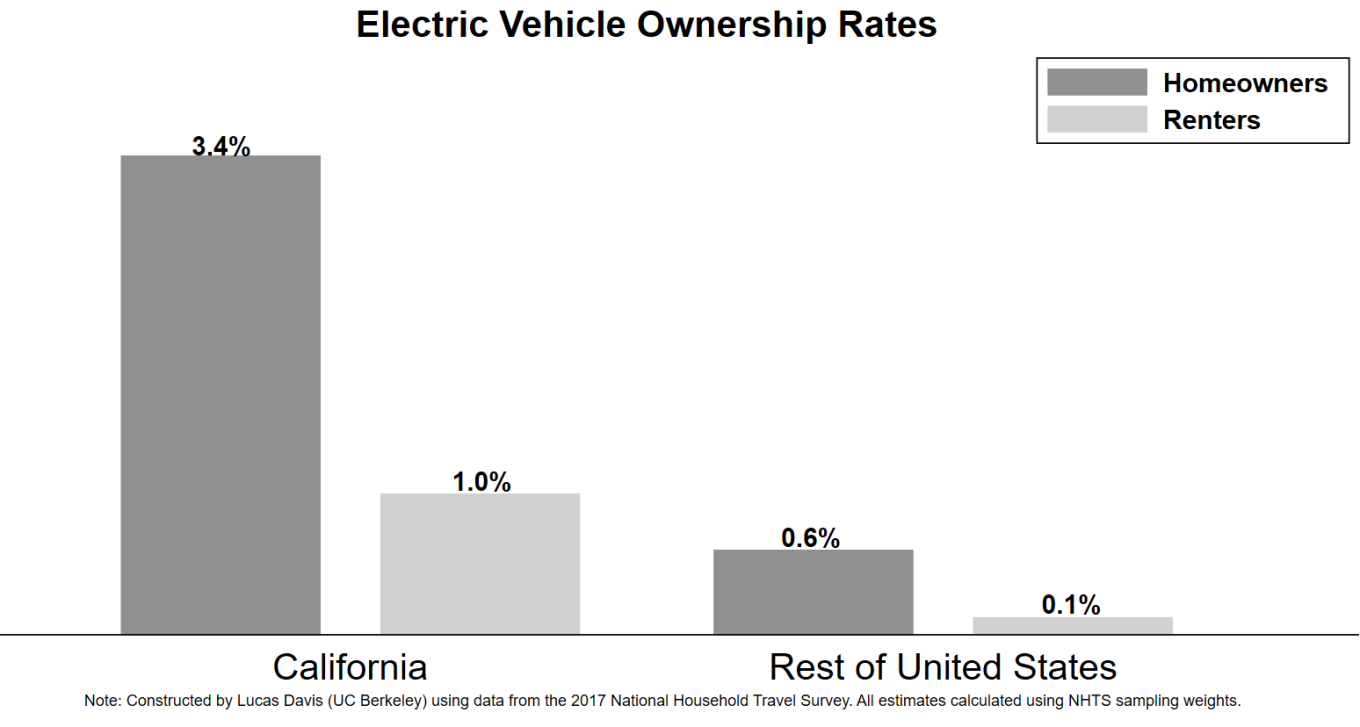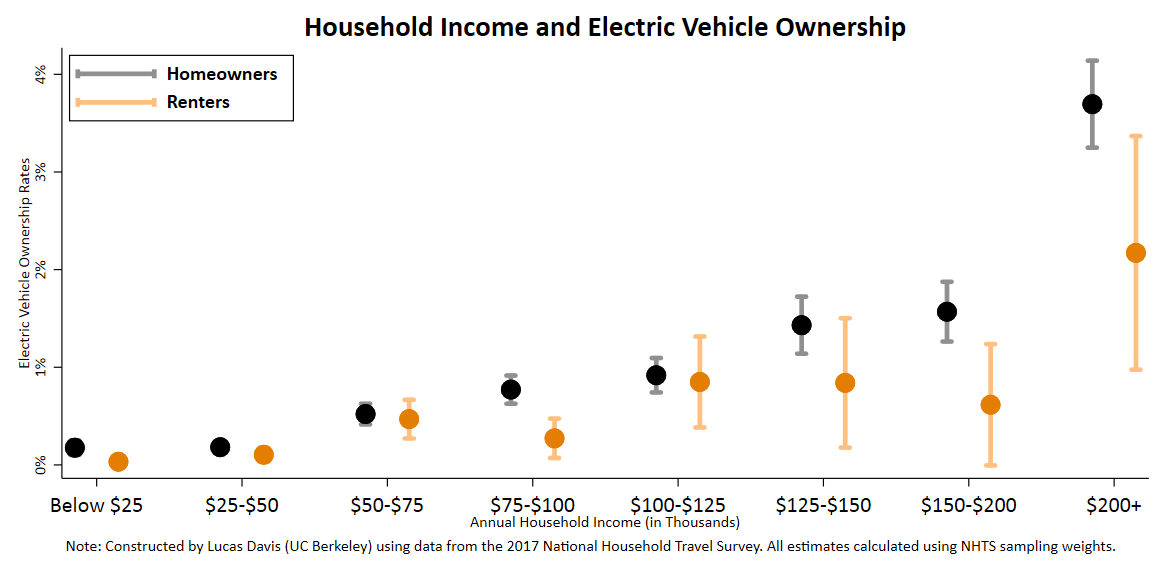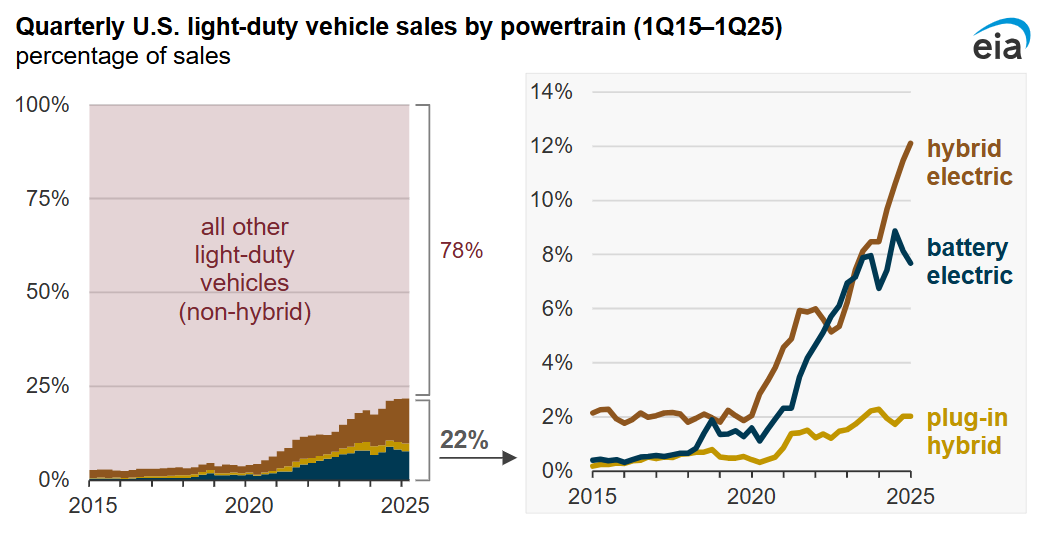
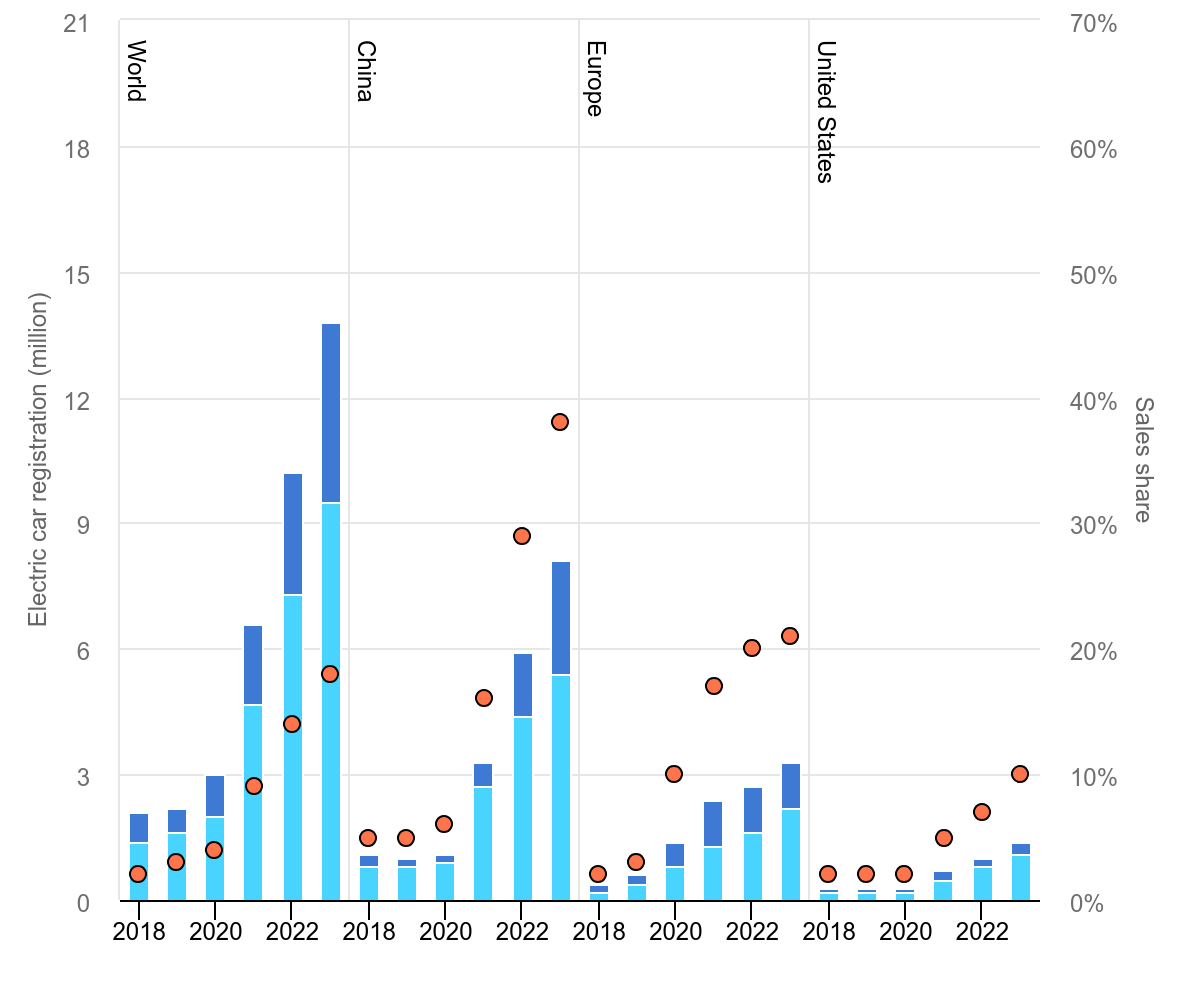
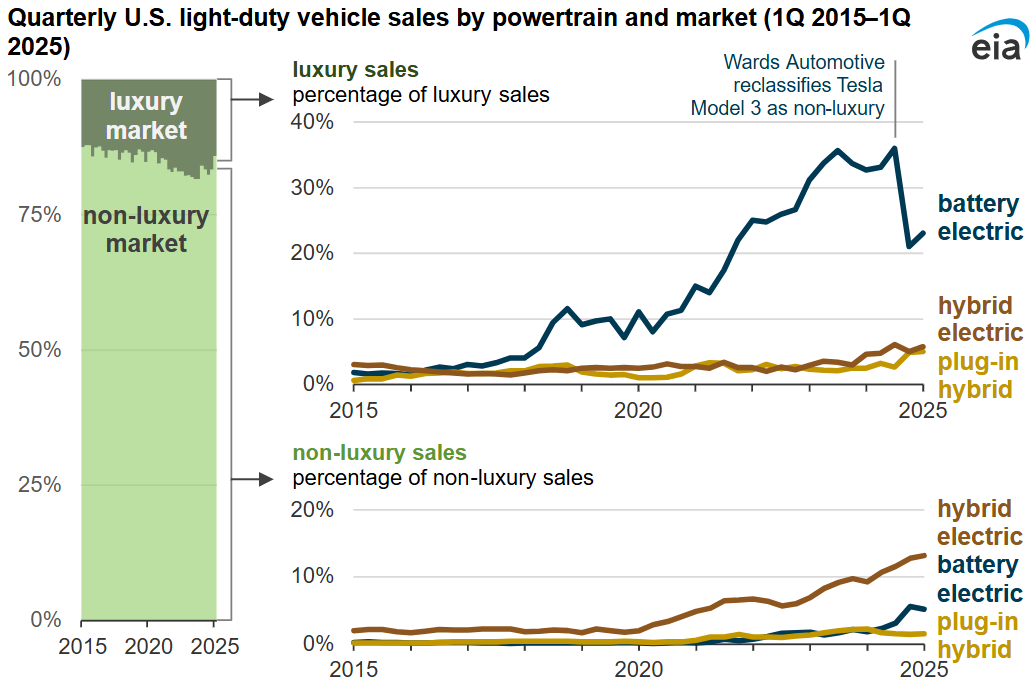

Main barrier is often range anxiety

Back to Energy Efficiency Gap Framework
Consumer chooses between two technologies:
Total cost of ownership:
\[\text{Total Cost} = \text{Purchase Price} + \text{PV(Operating Costs)}\]
Efficient choice: Buy EV if total cost, minus any utility differences between the cars, is lower than the total cost of ICE
Extensive Margin (Purchase Decision):
Intensive Margin (Usage Decision):
Both would increase the share of EVs. Which is better?
Important: Most externalities are on the intensive margin
Economic efficiency requires taxes that internalize these marginal external costs
This achieves two goals:
Key point: By fixing fuel prices, consumers optimally choose between EV and ICE based on full social costs. We don’t need additional subsidies or taxes on car purchases.
Still, some subsidies are better than others. How should we design these subsidies?
Idea: Get the most EVs per dollar of subsidy (or hit some EV target at the lowest cost)
Metric:
\[\text{Cost per additional EV} = \frac{\text{Total subsidy spending}}{\text{Additional EVs induced}}\]
Key parameter: Demand elasticity
\[\varepsilon = \frac{\% \Delta \text{ in quantity}}{\% \Delta \text{ in price}}\]
Demand elasticity determines:
Every subsidy hits two types of consumers:
Marginal effect (what we want):
Inframarginal effect (waste):
Problem: We can’t tell who is marginal vs. inframarginal – so everyone who buys an EV gets the subsidy
Additionality = Fraction of subsidized EVs that are marginal to the subsidy
\[\text{Additionality} = \frac{Q_s - Q_0}{Q_s} \approx \frac{\varepsilon \cdot s/P}{1 + \varepsilon \cdot s/P}\]
Higher |ε| → higher additionality → more cost-effective
Assumptions:
| Elasticity | Additionality | Cost per Additional EV ($000) |
|---|---|---|
| -1.5 (low) | 16% | $63.3 |
| -2.5 (mid) | 24% | $42 |
| -3.5 (high) | 30% | $32.9 |
Even with a high elasticity, 70% of Tesla subsidies are wasted on inframarginal buyers, and the cost per additional EV is $33k!
Assumptions:
| Elasticity | Additionality | Cost per Additional EV ($000) |
|---|---|---|
| -1.5 (low) | 30% | $33.3 |
| -2.5 (mid) | 42% | $24 |
| -3.5 (high) | 50% | $20 |
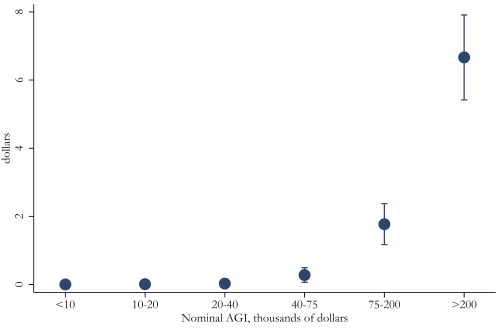
Lower-priced vehicles have better cost-effectiveness, but total cost per additional EV close to the price of a car itself!
To maximize cost-effectiveness, target:
1. Lower-priced vehicles
2. More price-sensitive consumers
Average EV Credit per Tax Return, By Income Level
Source: Davis
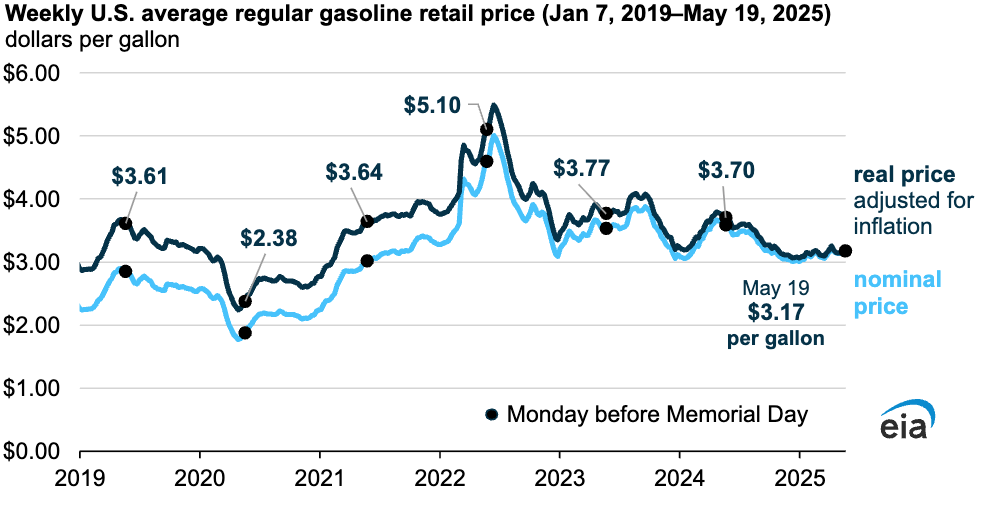
Operating costs matter because:
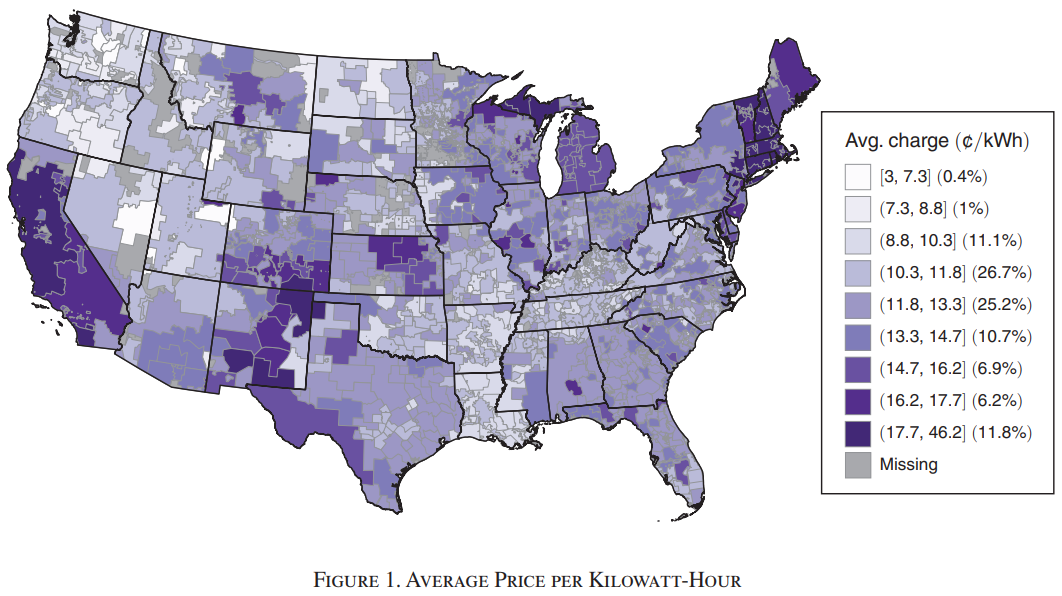
These vary meaningfully across space and time (but differently for EVs vs. ICEs)
Difference across states at any time is relatively small
Many California utilities use Increasing Block Pricing (IBP):
Problem for EVs:
Many utilities offer special EV rates:
Are these efficient?
❌ No! Electricity price should equal social marginal cost regardless of end-use
Problems:
Better: Price all electricity at SMC, then add Pigouvian tax/subsidy
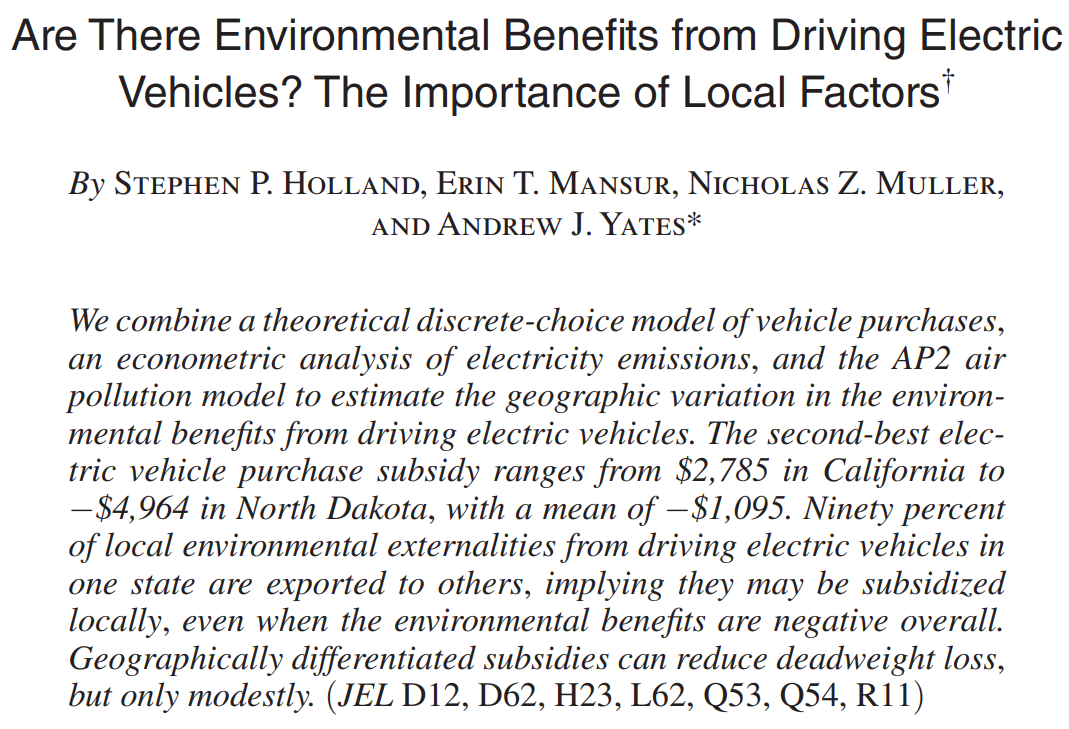
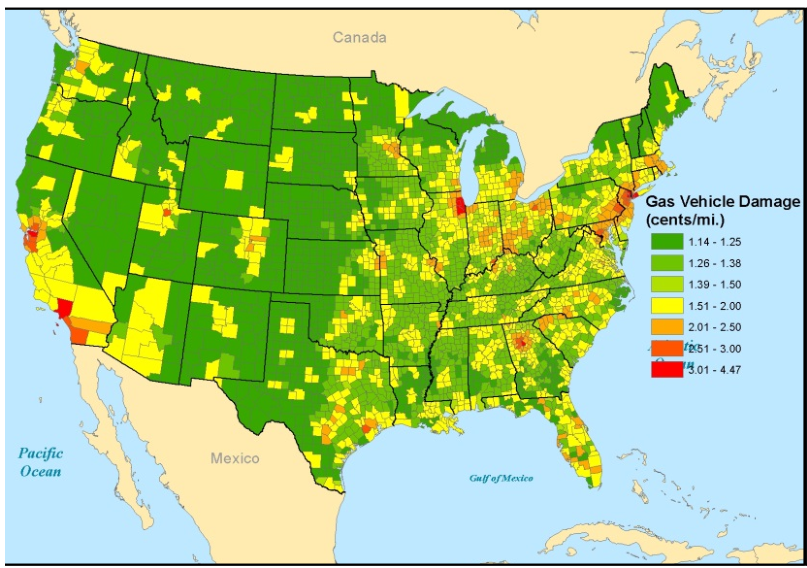
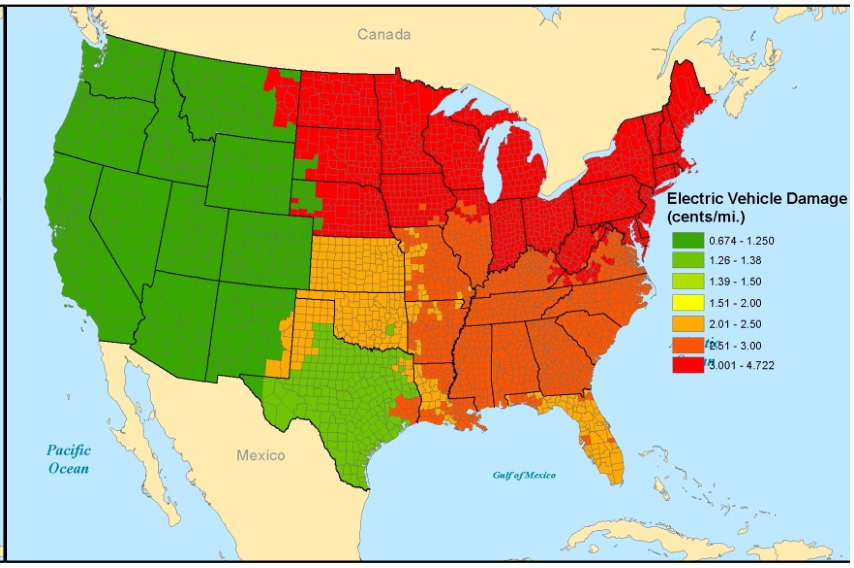
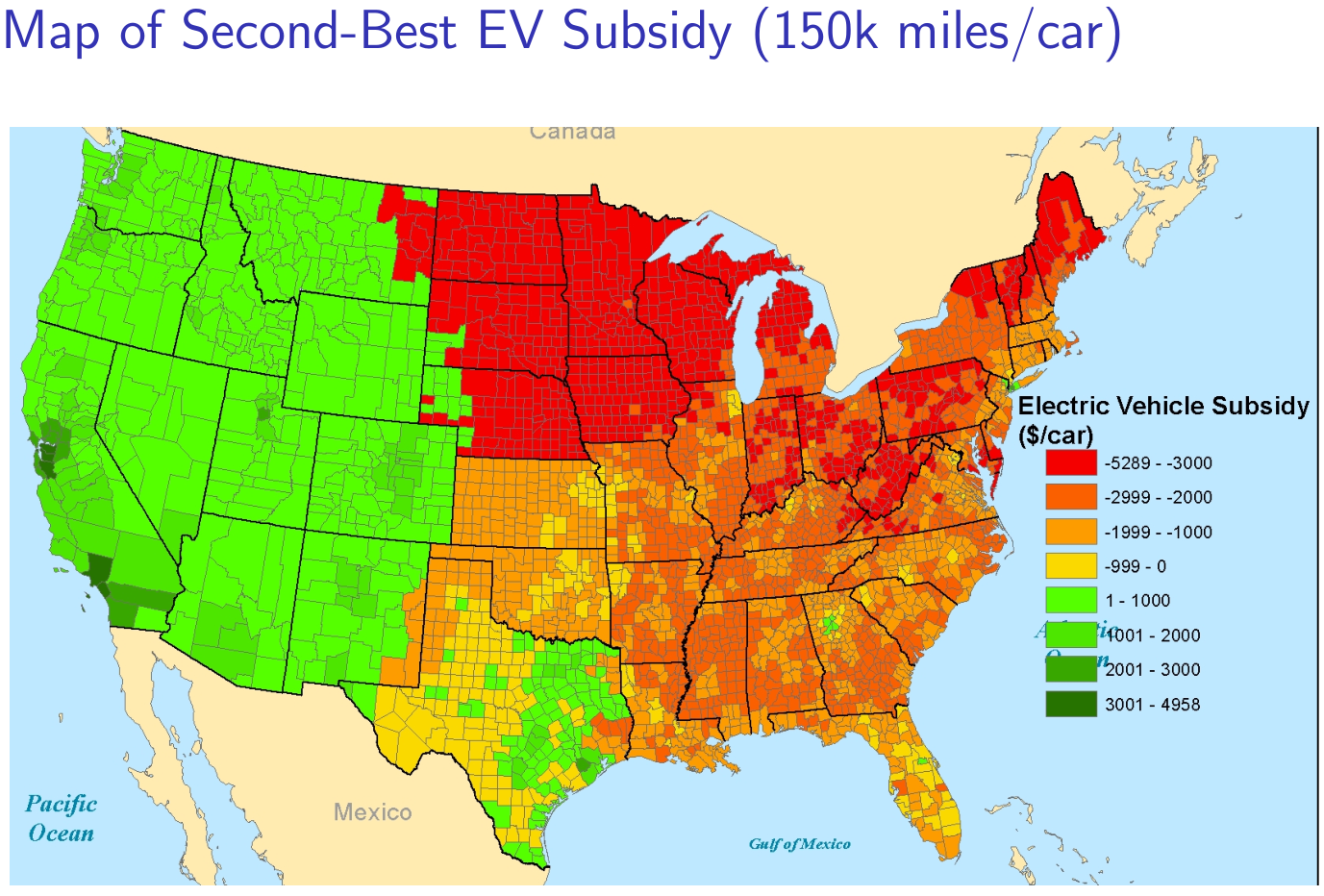
Environmental benefits vary by location:
Key point: One-size-fits-all federal subsidy is inefficient
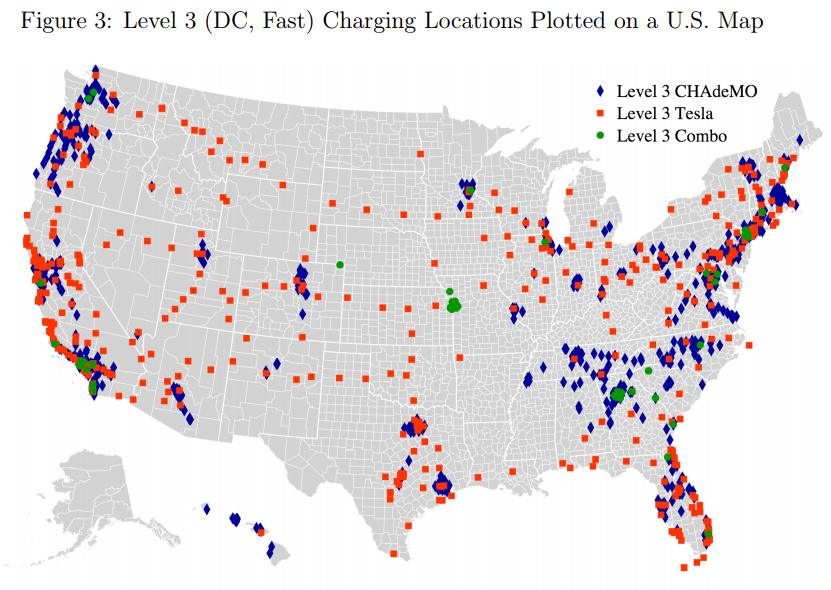
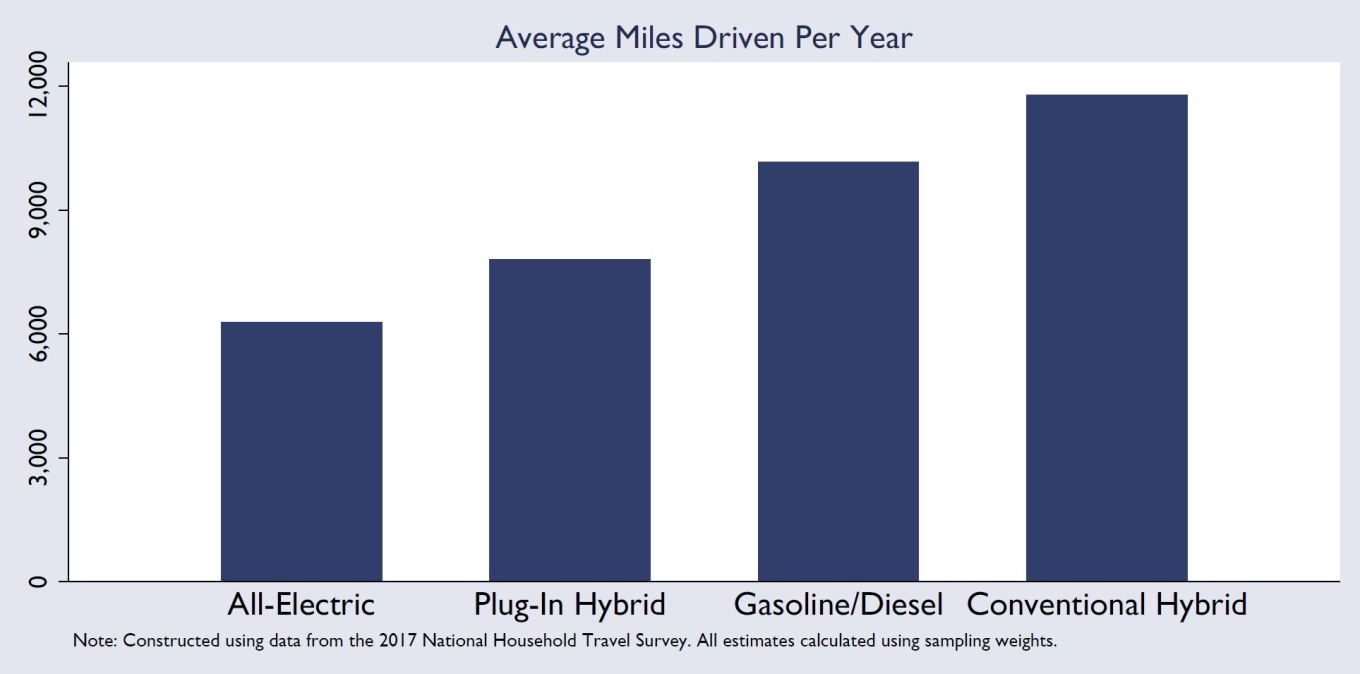
Why is range such a big issue for car buyers then?
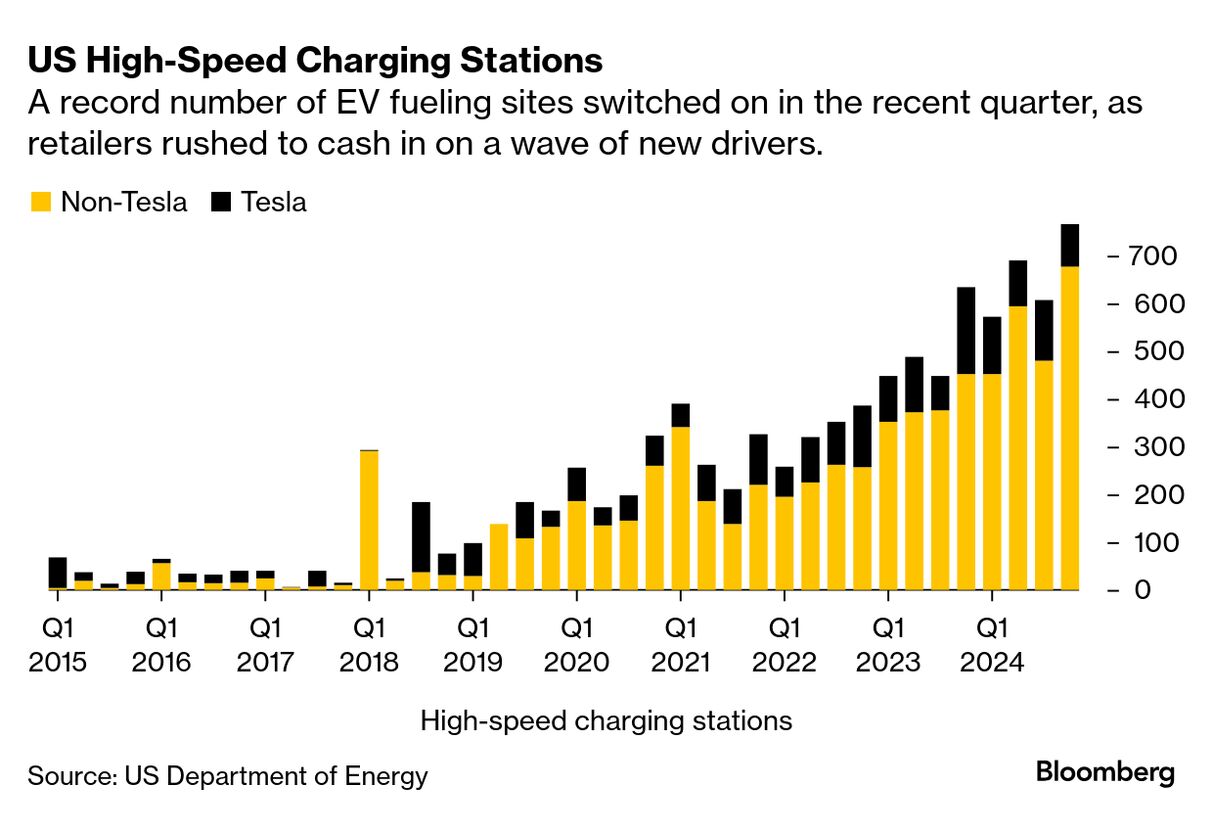
Still small relative to existing gas station network
What are some pros and cons of this?
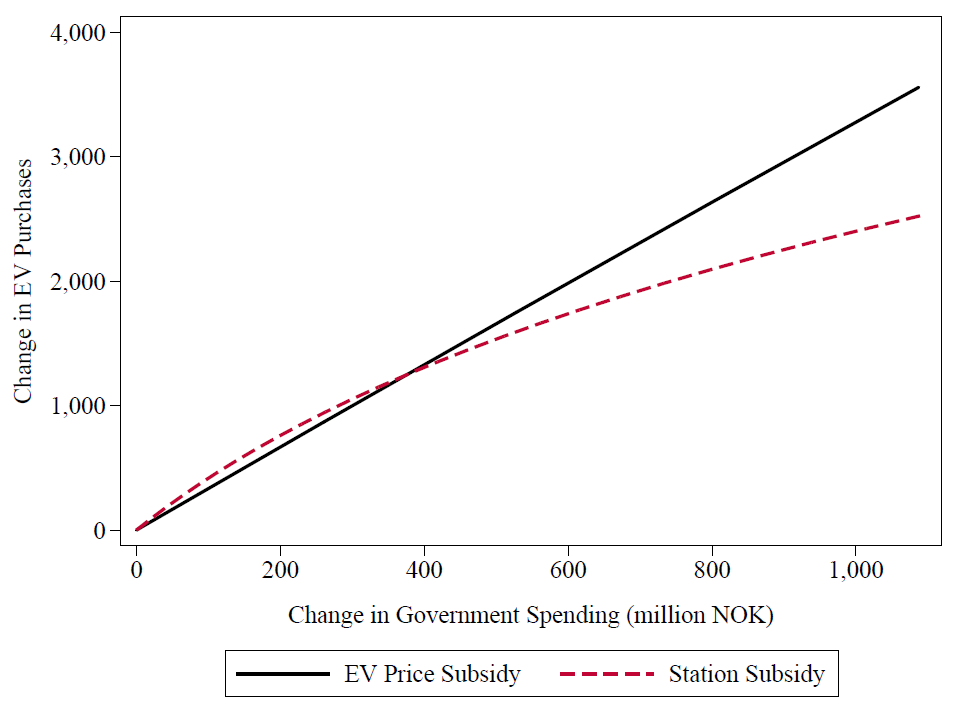
Would it be more cost-effective?
Li (2019) finds:
Econ 3391 - EVs